

Sacred Heritage
Visit ancient Buddhist monasteries, temples, and sacred sites steeped in history.
Discover the soul of Bhutan through a carefully curated journey across its most captivating valleys, where ancient traditions, sacred heritage, and extraordinary landscapes come together. Travel through Paro, Haa, Thimphu, Punakha, and Wangdue Phodrang, each revealing a different side of the kingdomfrom quiet mountain valleys and dramatic Himalayan vistas to centuries-old monasteries, temples, and sacred stupas. Along the way, immerse yourself in Bhutanese culture, encounter the country’s living Buddhist traditions, and experience the warmth of its people and timeless way of life. Thoughtfully paced and rich in authentic experiences, this journey offers a deeper connection to Bhutan beyond its scenery.
Visit ancient Buddhist monasteries, temples, and sacred sites steeped in history.
Discover the revered fertility temple, a unique and cherished part of Bhutanese spiritual tradition.
Take in breathtaking mountain panoramas from the scenic Dochula and Chele La Passes.
Experience genuine Bhutanese hospitality through farmhouse dinners and meaningful encounters with local families.
Day by Day
Fly into Paro with Drukair (Royal Bhutan Airlines) or Bhutan Airlines. After completing immigration and customs formalities, meet your private guide at the airport and begin your scenic drive to Thimphu, Bhutan’s capital city. Upon arrival, check into your hotel and take some time to settle in and relax after your journey. Overnight: Hotel in Thimphu

After breakfast, set out to explore Thimphu, Bhutan’s vibrant capital and cultural heart. Begin with a visit to the Takin Preserve, home to Bhutan’s unique national animal, followed by a stop at BBS Tower for panoramic views over the city. Continue to the Memorial Chorten, built in memory of Bhutan’s Third King, and admire the impressive Buddha Dordenma statue overlooking the valley. Visit Simply Bhutan to experience traditional customs and everyday life, followed by a visit to the historic Tashichho Dzong. Later, explore the Craft Bazaar and visit the Nunnery Temple before discovering the National Institute for Zorig Chusum, also known as the Painting School, where Bhutanese students learn traditional arts and crafts. End the day with some free time to explore Thimphu town at your own pace. Overnight: Hotel in Thimphu
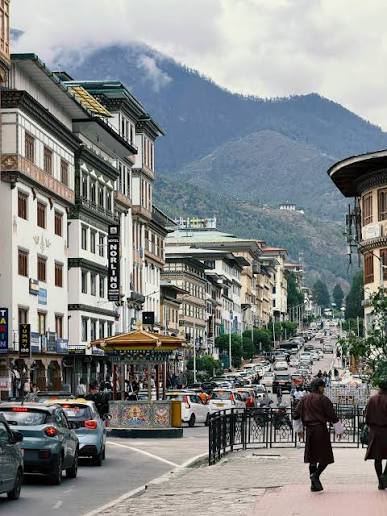
After breakfast, journey to Punakha via Dochula Pass at 3,100 metres, where clear skies reveal spectacular views of the Himalayan peaks. Descend into the warm and lush Punakha Valley, the former capital of Bhutan. After lunch, visit the magnificent Punakha Dzong, the “Palace of Great Happiness,” built in 1637 by Zhabdrung Ngawang Namgyal. Continue to Khamsum Yulley Namgyal Chorten, reached by a scenic walk through rice fields and across the river, with beautiful views of the valley. Later, visit Metshina Village and walk through the rice fields to Chimi Lhakhang, Bhutan’s revered fertility temple, where you may receive a special blessing if you wish. Overnight: Hotel in Punakha
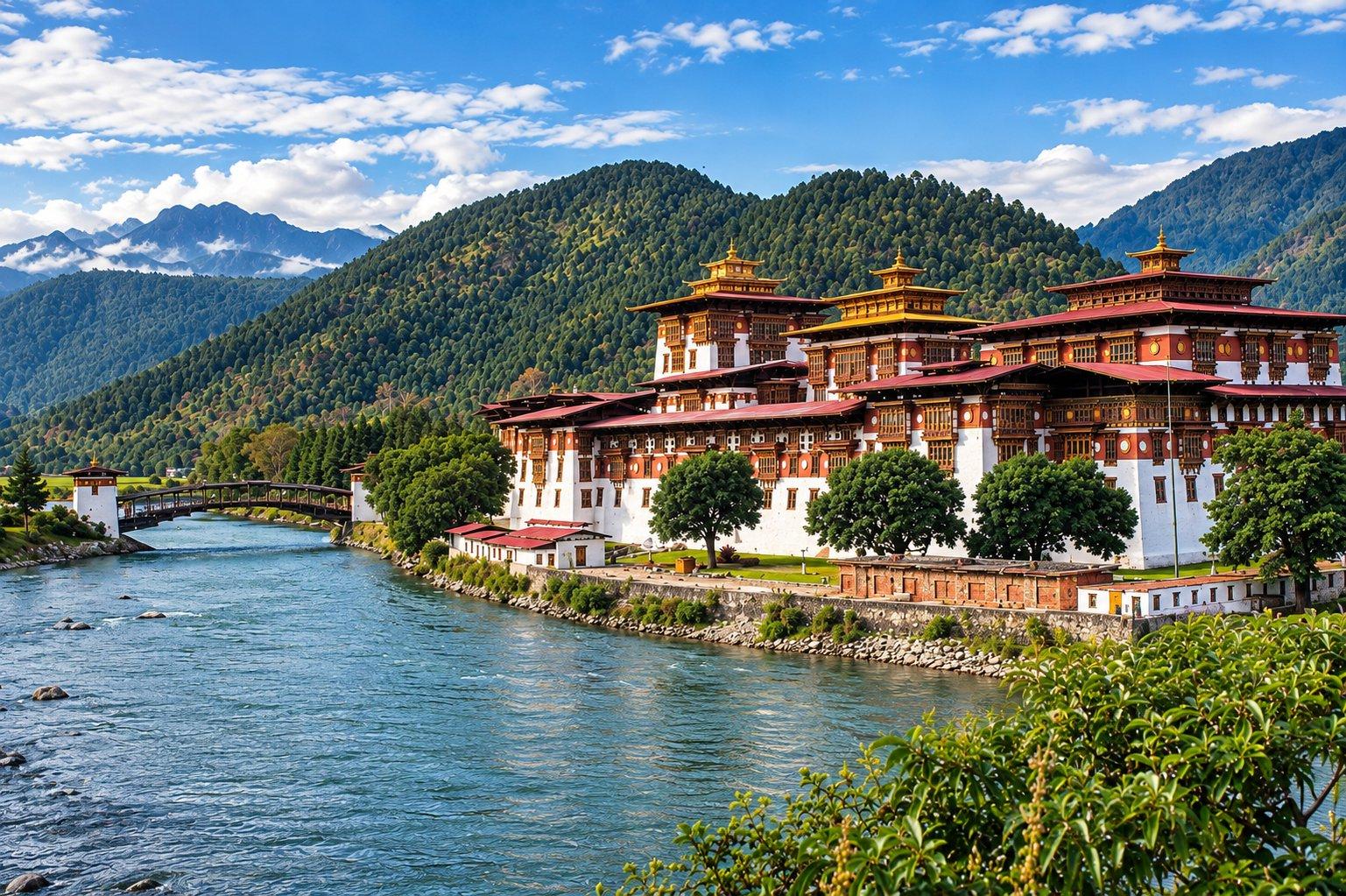
You will begin the day by driving to Gangtey. You’ll pass through dense forests of oak trees and rhododendrons and arrive at Gangtey village, where you’ll visit Gangtey Gompa, the only Nyingmapa monastery in western Bhutan. From Gangtey, you can see the picturesque Black Mountain range as well as Phobjikha Valley, the winter habitat of the black-necked cranes. Overnight Hotel in Gangtey
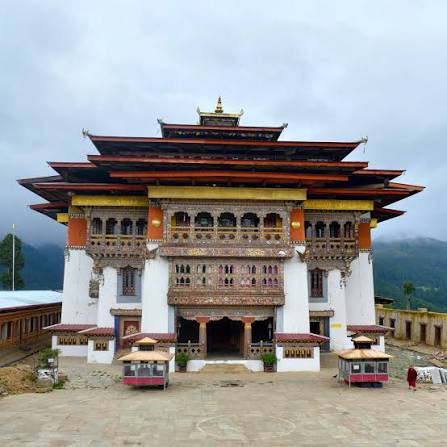
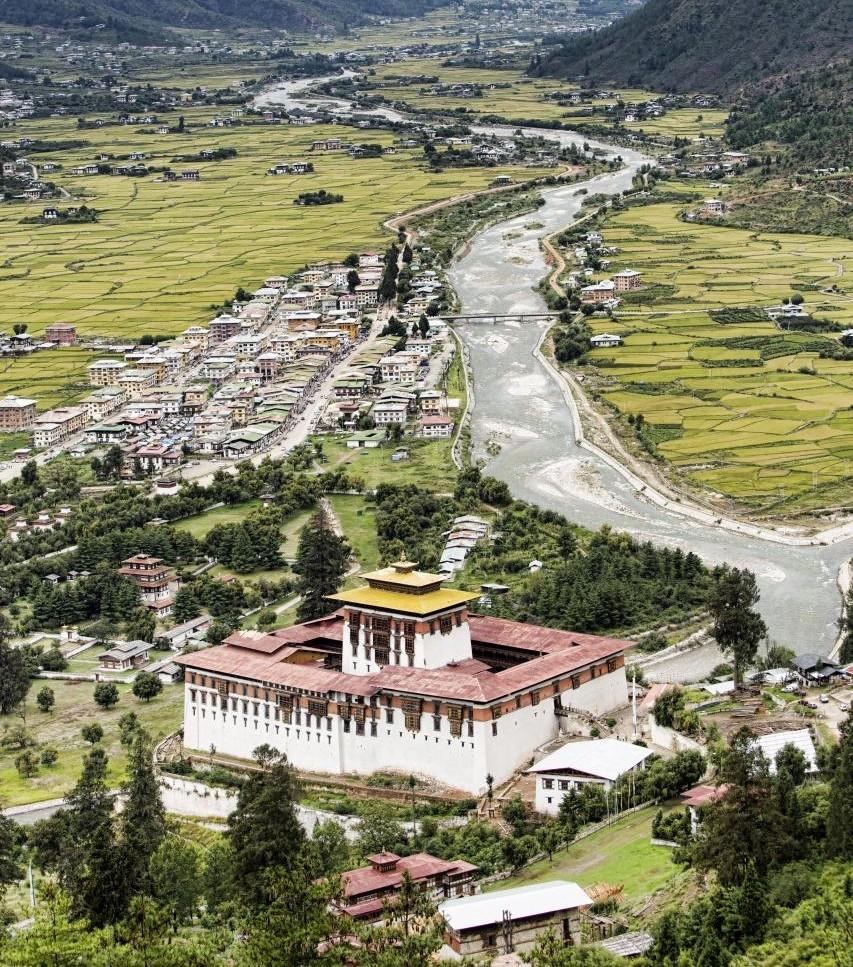
After breakfast, journey back to Paro through Bhutan’s scenic mountain roads. After lunch, visit the historic Drukgyel Dzong, a fortress steeped in Bhutanese history. On clear days, enjoy views of the sacred Mount Jomolhari rising majestically in the distance. Continue exploring Paro with visits to the Ta Dzong Museum and the impressive Rinpung Dzong, followed by time to discover other cultural landmarks around the valley. Overnight: Hotel in Paro
Moments
Good to Know
There are 19 languages spoken in Bhutan, but the national language is Dzongkha. English is used throughout Bhutan’s education system, so it is widely used and understood.
Bhutan is a year-round destination. There are four seasons: summer (June to August), autumn (September to November), winter (December to February) and spring (March to May). But because of the range of altitudes in the country, and the influence of the north Indian monsoons, the climate is incredibly varied. In the south, the humid, subtropical climate is fairly consistent year-round, with temperatures between 15oC and 30oC. Central Bhutan, with its temperate forests, has a more seasonal climate, with warm summers and cool, dry winters. The northern regions are much colder during winter. Because of the high altitude, mountain peaks are snowy year-round and the lower reaches remain cool in summer. In summer, the Indian monsoon season runs from late June or July to late September, mostly affecting the southern regions. Most farming activities take place in the summer, when crops thrive in verdant landscapes. Autumn, from late September or early October to late November, follows the rainy season. It is characterised by bright, sunny days and some early snowfall at higher elevations. It’s the season of feasts and festivals as farmers reap the fruits of their work. From late November until March, the crisp, clear and sunny winter sets in, with frost throughout much of the country and snowfall common above elevations of 3,000 metres. The winter northeast monsoon brings gale-force winds at the highest altitudes through high mountain passes, giving Bhutan the name Drukyul, which means Land of the Thunder Dragon in Dzongkha (Bhutan’s national language). Bhutan’s generally dry spring starts in early March and lasts until mid-April. It is a botanist’s delight, with nature in full bloom. Summer weather commences in mid-April with occasional showers and continues to late June.
For telephone calls, Bhutan’s country code is +975. Make sure you add this to the beginning of any number if calling Bhutan from abroad.
Keep Exploring


